
Dubai Opened an AI Regulatory Sandbox. Joining It Does Not Mean Your Product Is Approved
Dubai Future Foundation has launched an AI Sandbox for companies with AI-native products at MVP stage or beyond to test them with regulators in real-world environments. Participants may explore regulatory exemptions where relevant, but exemptions remain subject to approval and sandbox participation is not itself permission for commercial deployment.
Arabian Current
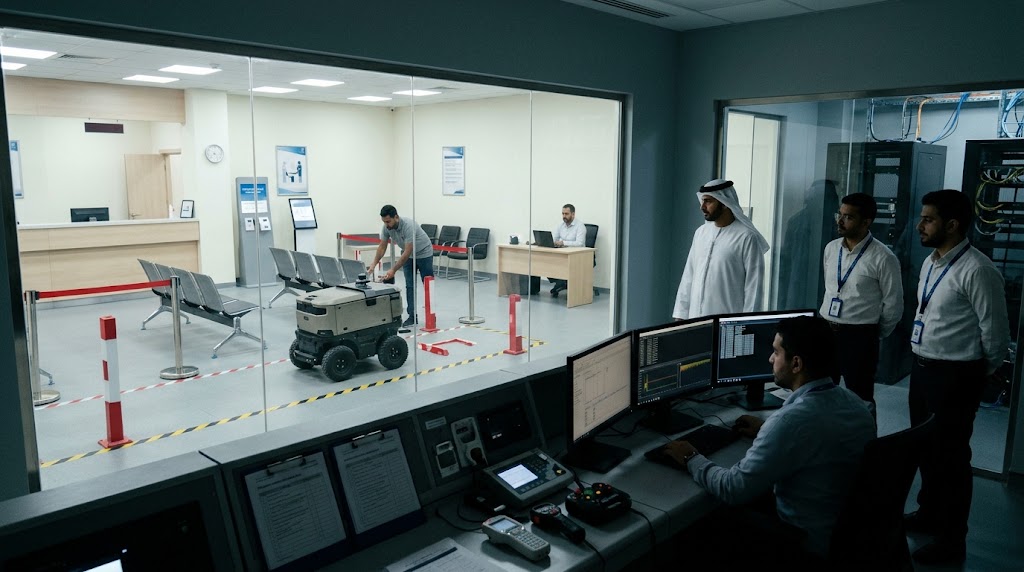
Dubai has launched an AI Sandbox for commercially ready AI products to test alongside regulators, but participation does not itself grant regulatory approval or an exemption from existing requirements.
Dubai is trying to solve one of the harder problems between building an AI product and putting it into the real world.
The technology can work before the regulatory pathway does.
Dubai Future Foundation, through Sandbox Dubai, has launched an AI Sandbox where companies can test AI-native solutions alongside government entities and regulators.
But entering the sandbox is not the same thing as receiving permission to operate commercially without restrictions.
The programme starts after the earliest prototype stage
Applicants must have an AI-native solution at minimum viable product stage or beyond.
Dubai Future Foundation also says applicants should demonstrate readiness for commercialisation and the ability to generate useful evidence for policy and regulatory development.
That means the sandbox is aimed at products close enough to market for regulatory questions to become practical rather than purely theoretical.
Regulatory exemptions may be explored, not automatically granted
Depending on the use case and the rules involved, participating companies may explore potential regulatory exemptions.
Dubai Future Foundation explicitly says those exemptions remain subject to approval by the relevant authorities.
A sandbox therefore creates a controlled environment for regulators and companies to investigate whether flexibility is appropriate.
It does not give every participant a general exemption from existing law or regulation.
Regulators are supposed to learn from the testing too
The programme is designed as a two-way process.
Companies receive technical, policy and commercial support while regulators observe real applications, identify risks and gather evidence.
That evidence can then inform decisions about whether existing frameworks need to change.
The sandbox is therefore partly a route for companies and partly a mechanism for Dubai to test its own rules against emerging technology.
Real-world testing still sits before general deployment
The initiative covers sectors including healthcare, education, transport and mobility, logistics, tourism, media and government services.
Some of those sectors carry much higher safety, privacy or licensing requirements than others.
A successful controlled test should therefore not be treated automatically as evidence that the same system can immediately operate at unrestricted scale.
Applications close on December 18
The AI Sandbox is open to local and international startups, SMEs and established technology companies.
Applications are scheduled to remain open until December 18, 2026.
The launch announcement does not state how many companies will ultimately be accepted or how long individual testing programmes will run.
What Arabian Current is watching
Watch which companies are selected, what regulatory obstacles they encounter, which exemptions are actually approved and whether products move from sandbox testing into ordinary commercial operation.
The strongest evidence will not be how many companies apply. It will be how many leave with a clearer legal pathway into the market.
AI companies facing regulatory uncertainty could encounter a gap between successful technical experimentation and permission for real-world deployment.
Sandbox Dubai has created a dedicated AI programme where qualifying products can be tested with government entities and regulators in controlled real-world settings.
The next evidence will be selected participants, approved testing arrangements, any regulatory exemptions and products that successfully move from sandbox testing into wider deployment.
What supports the signal.
Claims stay source-linked, with limits recorded.
Dubai Future Foundation says applicants must be at MVP stage or beyond, demonstrate commercial readiness and be capable of generating evidence for policy development. Possible regulatory exemptions remain subject to approval by the relevant authorities.
Operational use matters more than launch-day claims or model marketing.
Models, infrastructure, research and governance are separated when they imply different things.
The story is framed around what changes for UAE organisations and decision-makers.
Open the evidence record.
2 linked sourcesSupport + limitations recorded.
01Core evidenceDubai Future Foundation launches AI Sandbox to accelerate deployment of emerging AI technologies
Emirates News Agency
+
Dubai Future Foundation launches AI Sandbox to accelerate deployment of emerging AI technologies
Emirates News Agency
Confirms the AI Sandbox launch, applicant requirements, participating entity types, real-world testing model, possible regulatory exemptions and December 18 application deadline.
Does not disclose cohort size, approved exemptions or participant outcomes because the programme has only just opened.
02ContextSandbox Dubai
Dubai Future Foundation
+
Sandbox Dubai
Dubai Future Foundation
Explains Sandbox Dubai's wider model of controlled real-world testing under adaptive regulatory supervision and temporary regulatory relief where approved.
Provides the general Sandbox Dubai framework rather than outcomes from the newly launched AI-specific programme.
Evidence is the next test.
Track selected companies, participating regulators, exemptions, testing outcomes, policy changes and commercial deployments after sandbox completion.
Reporting with a visible evidence trail.
Arabian Current reporting is built around human editorial authority, source-linked claims and visible evidence trails.