
Abu Dhabi Built a Path for AI to Perform Clinical Work. It Has Not Licensed an AI Doctor Yet
Abu Dhabi's Department of Health has published a framework describing how AI clinician systems could eventually be authorised to perform activities that normally require a licensed clinician. The framework creates a research and evaluation pathway, but it does not itself authorise an AI system to practise independently today.
Arabian Current
Abu Dhabi has created a regulatory framework for researching and potentially authorising AI clinician systems, but the framework itself does not authorise an autonomous AI doctor to practise independently.
Abu Dhabi is preparing for a healthcare question that still sounds futuristic: what evidence would an artificial-intelligence system need before it could perform clinical work normally reserved for a licensed clinician?
The Department of Health has now published an AI Clinician Framework designed to answer that question.
It creates a regulatory structure for researching, evaluating and potentially authorising AI clinician systems.
It does not mean an autonomous AI doctor has already been licensed to practise in Abu Dhabi.
Authorisation would attach to specific clinical activities
Under the framework, competence is assessed against the clinical activities an AI system is intended to perform.
A system seeking a broader clinical scope would need stronger evidence and a higher demonstrated level of competence before it could be considered.
That makes the proposed regulatory model activity-based rather than treating an AI product as simply safe or unsafe for medicine as a whole.
The framework is not the final permission
The Department of Health says the framework will provide the basis for future policies and supporting standards.
Those later rules will define which clinical activities an AI clinician could be authorised to perform, what evidence is required at each stage and the thresholds used to evaluate it.
Publication of the framework therefore creates the pathway toward possible authorisation rather than granting that authorisation itself.
Physicians remain inside the system
The framework requires safeguards across levels of clinical scope, including physician oversight and accountability.
AI clinician systems must also be able to refer a case to a physician when necessary.
That means the current regulatory direction is not built around removing licensed clinicians from responsibility entirely.
More autonomy would require more evidence
An AI system performing a narrow clinical task creates a different risk from one expected to make decisions across a much wider range of patient situations.
Abu Dhabi's approach links the breadth of clinical activity to the strength of evidence required.
The more an AI system is expected to do, the more competence it must demonstrate before regulators consider expanding its scope.
Research comes before routine care
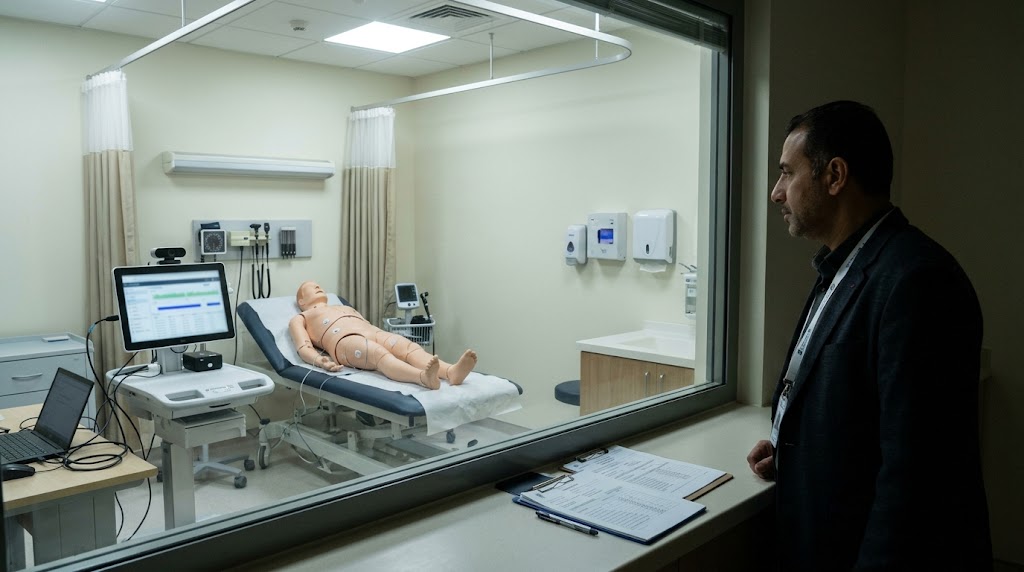
Research under the framework will take place through Abu Dhabi's living-lab model and governed clinical research pathways.
That creates a controlled environment in which systems can be studied before a wider operating permission is considered.
A successful research programme should therefore not automatically be read as permission for routine clinical deployment.
AI healthcare regulation is moving beyond software approval
The interesting part of the framework is that Abu Dhabi is preparing for systems that may eventually perform clinical activities rather than simply support a physician with information.
That raises harder questions around competence, escalation, accountability and the boundaries of machine decision-making.
Those questions become more important as AI moves from recommending an action toward performing parts of the clinical role itself.
What Arabian Current is watching
Watch the first supporting standards, the clinical activities selected for research, evidence thresholds, authorised scope and how physician intervention works as AI systems gain greater independence.
The real state change will come when a specific AI clinician system moves from research into a clearly defined authorised clinical activity.
AI systems could support healthcare workflows, but Abu Dhabi had not publicly established a dedicated regulatory pathway for systems that could eventually perform activities normally requiring a licensed clinician.
DoH has published an AI Clinician Framework linking potential clinical scope to demonstrated competence and evidence while maintaining physician oversight and accountability.
Future DoH policies and standards must define the specific clinical activities, evidence requirements and thresholds for any actual authorisation.
What supports the signal.
Claims stay source-linked, with limits recorded.
The Department of Health says competence will be evaluated against the specific clinical activity proposed, broader scope requires stronger evidence, and future supporting standards will determine what AI clinician systems may actually be authorised to do.
Operational use matters more than launch-day claims or model marketing.
Models, infrastructure, research and governance are separated when they imply different things.
The story is framed around what changes for UAE organisations and decision-makers.
Open the evidence record.
1 linked sourceSupport + limitations recorded.
01Core evidenceDoH publishes AI Clinician Framework to guide responsible research into AI clinician systems
Emirates News Agency
+
DoH publishes AI Clinician Framework to guide responsible research into AI clinician systems
Emirates News Agency
Confirms the framework, competence-based assessment, physician oversight, future supporting policies and the potential pathway toward clinical authorisation.
Does not identify a specific AI clinician already authorised for independent routine clinical practice.
Evidence is the next test.
Track clinical research programmes, supporting standards, evidence thresholds, physician escalation requirements and the first system considered for a defined authorised activity.

Reporting with a visible evidence trail.
Arabian Current reporting is built around human editorial authority, source-linked claims and visible evidence trails.