
Saudi Arabia Has 44,000 People Enrolled in AI Skills Training. That Is Not 44,000 Graduates
Saudi Arabia's Skills Accelerator has enrolled more than 44,000 people in AI-focused training as part of a wider programme targeting more than 300,000 private-sector workers. The Ministry of Human Resources says the next phase will expand measurement of training outcomes, making enrolment a different metric from completion or job impact.
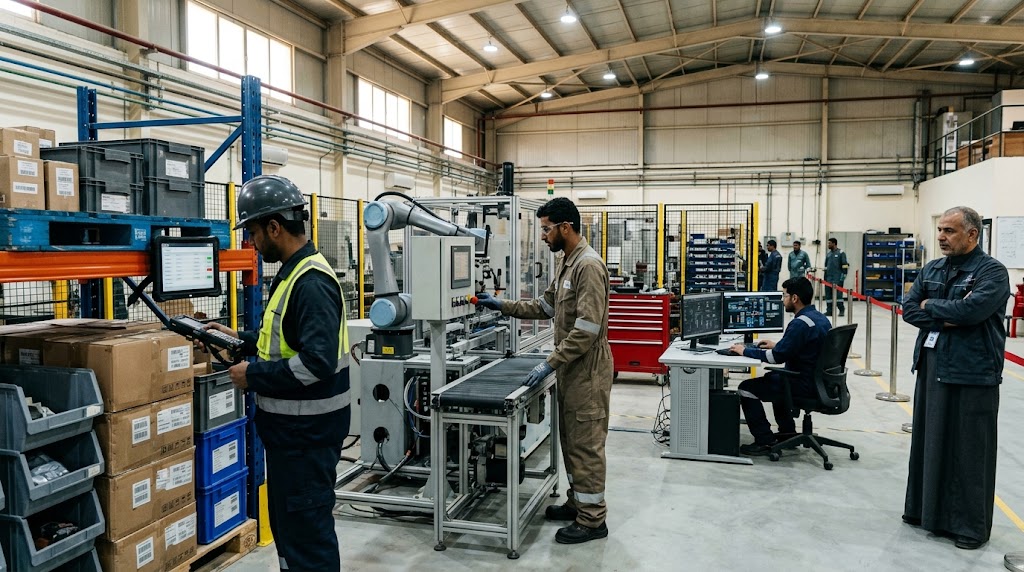
Arabian Current
More than 44,000 trainees are enrolled in AI training through Saudi Arabia's Skills Accelerator, while the broader programme targets more than 300,000 beneficiaries. Neither figure should be treated as proof of completed training or labour-market impact.
Saudi Arabia is putting tens of thousands of private-sector workers through artificial-intelligence training.
The more useful question is what happens after the course.
The Ministry of Human Resources and Social Development says more than 44,000 trainees are enrolled in AI skills programmes through its Skills Accelerator initiative.
The broader initiative aims to develop the skills of more than 300,000 beneficiaries.
The 300,000 figure is a target
The Ministry describes more than 300,000 beneficiaries as the scale the initiative aims to develop.
It should not be reported as 300,000 workers already trained.
The operating evidence published so far includes more than 590 training programmes across over 10 priority labour-market sectors.
44,000 refers to AI training enrolment
The AI figure is also specific.
The Ministry says more than 44,000 trainees are enrolled in artificial-intelligence skills training.
That does not establish that all 44,000 have completed their programmes, passed an assessment or moved into an AI-related role.
Enrolment measures participation at the front of the training process.
The programme extends beyond technology companies
Skills Accelerator is designed around private-sector labour-market needs rather than only the technology industry.
More than 10 priority sectors are covered through professional and technical training.
AI therefore sits inside a broader workforce programme intended to change the skills used across existing industries rather than create a separate AI workforce alone.
590 programmes tell us activity, not effectiveness
Training-programme volume shows how much infrastructure exists around the initiative.
It does not show whether workers become more productive, earn more, change occupations or remain employed for longer.
The same course can produce very different outcomes depending on its difficulty, duration, assessment and relevance to a participant's actual job.
The Ministry says outcome measurement is the next phase
MHRSD says it plans to expand measurement of training outcomes in the next phase.
It will also complete skills surveys across priority sectors and strengthen digital integration with government entities, companies and service providers.
That is significant because it moves the programme toward measuring whether the training matches real workforce needs.
AI training is becoming part of ordinary workforce policy
Saudi Arabia is no longer treating AI skills only as something for software developers or specialist researchers.
The Skills Accelerator puts AI inside a national private-sector reskilling programme.
That suggests the policy question is increasingly about how existing workers use AI inside ordinary jobs rather than how many dedicated AI engineers the country can produce.
The next numbers should measure conversion
Useful future indicators would include programme completion, assessment results, employer adoption, productivity changes, job mobility and salary outcomes.
Without those figures, a large enrolment number establishes demand for training but not yet the economic value created by it.
What Arabian Current is watching
Watch completions, employer participation, measured training outcomes, occupational standards and whether AI training leads to observable changes in jobs and productivity.
Saudi Arabia has now shown that tens of thousands of people are entering AI training. The harder question is how many leave with skills employers actually use.
Saudi workforce programmes were expanding professional and digital skills across multiple sectors.
Skills Accelerator has delivered more than 590 programmes, with more than 44,000 trainees enrolled specifically in AI skills training.
The Ministry says the next phase will expand measurement of training outcomes and sector-level skills needs.
What supports the signal.
Claims stay source-linked, with limits recorded.
Saudi Press Agency reports the 300,000-beneficiary target, more than 590 programmes across over 10 sectors and more than 44,000 trainees enrolled in AI skills training.
Operational use matters more than launch-day claims or model marketing.
Models, infrastructure, research and governance are separated when they imply different things.
The story is framed around what changes for Saudi Arabia organisations and decision-makers.
Open the evidence record.
1 linked sourceSupport + limitations recorded.
01Core evidenceHuman Resources Ministry Boosts Readiness of Saudi Private-Sector Workers through the Skills Accelerator
Saudi Press Agency
+
Human Resources Ministry Boosts Readiness of Saudi Private-Sector Workers through the Skills Accelerator
Saudi Press Agency
Confirms the 300,000-beneficiary target, more than 590 programmes, more than 10 sectors, 44,000-plus AI trainees and plans to expand outcome measurement.
Does not disclose AI-course completion rates, assessment outcomes, job placement, salary impact or employer-level productivity changes.
Evidence is the next test.
Track completion rates, assessment results, employer participation, job mobility, productivity and whether the Ministry publishes comparable outcome metrics.

Reporting with a visible evidence trail.
Arabian Current reporting is built around human editorial authority, source-linked claims and visible evidence trails.