
Qatar's Technology Ministry Tested Service-Disruption Plans. A Drill Is Not a Real Outage
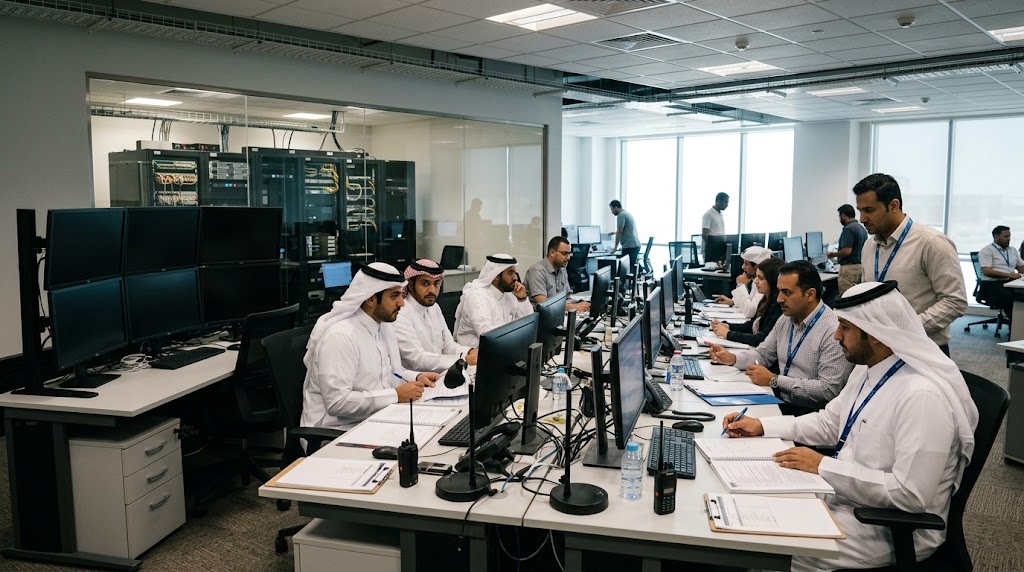
Qatar's Ministry of Communications and Information Technology has run simulations covering operational and service disruptions after a year building an integrated business continuity system. The exercises tested procedures and coordination, but no recovery-time results or real-outage performance metrics have been published.
Arabian Current
What happened
The Ministry has moved from planning into practical simulations covering operational and service disruptions.
Why it matters
Qatar's MCIT has tested operational and service-disruption response plans through simulations after a year building a business continuity system, but public recovery-time or performance results have not been disclosed.
MCIT has not disclosed the services tested, number of exercises, recovery-time results, severity of simulated incidents or quantitative performance against continuity targets.
Qatar's MCIT has tested operational and service-disruption response plans through simulations after a year building a business continuity system, but public recovery-time or performance results have not been disclosed.
Digital government becomes most visible when it stops working.
Qatar's Ministry of Communications and Information Technology has been testing what happens when operations or services are disrupted.
The Ministry says it conducted simulation exercises and practical tests built around scenarios designed to resemble real incidents.
The purpose was to find weaknesses before an actual disruption does.
The exercises tested more than technical recovery
MCIT says teams tested response procedures under simulated operational and service-disruption conditions.
The Ministry also assessed coordination and information-sharing between departments.
That matters because service continuity failures can come from organisational confusion as easily as from unavailable technology.
A system can technically recover while the people responsible for it still communicate too slowly.
The drills follow a year of continuity work
The exercises follow approximately a year spent establishing and activating an integrated business continuity management system.
That work included identifying teams responsible for incident management, crisis management and business recovery.
The Ministry also defined roles and responsibilities and developed response strategies and cross-department coordination mechanisms.
The purpose of a simulation is to find failure
MCIT says the exercises identified areas for improvement and opportunities to refine procedures.
That should not be read as evidence that the continuity programme failed.
A useful resilience exercise is supposed to expose unclear responsibilities, weak escalation points and recovery assumptions before those problems appear in a real incident.
But a simulation cannot reproduce every real disruption
A planned exercise happens in a controlled environment.
Teams know they are being tested and the scenario itself has boundaries.
A genuine outage can involve unknown technical faults, supplier dependencies, cyber incidents, physical failures or simultaneous problems that were not anticipated in the exercise.
Simulation therefore measures preparedness rather than proving resilience under every real-world condition.
The useful performance numbers have not been published
MCIT has not disclosed recovery-time objectives, actual recovery times recorded during the exercises, the number of scenarios tested or whether individual services failed their target.
It has also not identified which public-facing systems were included.
Those figures would make it possible to compare preparedness over time.
Service continuity is part of digital experience
Users normally judge a digital government service by how quickly and easily they can complete a task.
Resilience adds another dimension: whether that service remains available when something goes wrong.
A good interface is of limited value if the institution behind it cannot recover from disruption.
What Arabian Current is watching
Watch whether MCIT publishes recovery metrics, expands exercises across connected government entities or conducts more complex multi-system scenarios.
The strongest proof will not be another drill. It will be how quickly important services recover when an unplanned incident eventually happens.
MCIT spent approximately a year establishing teams, responsibilities and strategies for business continuity and crisis recovery.
The Ministry has moved from planning into practical simulations covering operational and service disruptions.
The next useful evidence will be repeat testing, published performance metrics and actual recovery performance during an unplanned incident.
Show the record behind the claim.
Claims stay source-linked, with limits recorded.
QNA reports that MCIT conducted simulation exercises and practical tests, evaluated coordination and information-sharing, identified areas for improvement and had previously spent a year establishing an integrated business continuity system.
Material reporting is designed to retain the evidence behind the published claim.
Companies, regulators and projects can link back to persistent records.
Automation can assist discovery and extraction; publication authority remains editorial.
Open the evidence record.
1 linked sourceSupport + limitations recorded.
01Core evidenceQatar's MCIT Tests Crisis Response Plans as World Marks Int'l Day for Disaster Risk Reduction
Qatar News Agency
+
Qatar's MCIT Tests Crisis Response Plans as World Marks Int'l Day for Disaster Risk Reduction
Qatar News Agency
Confirms the disruption simulations, coordination testing, identification of improvements and the year-long development of MCIT's business continuity management system.
Does not publish scenario details, recovery-time performance, test scores or the specific services included.
The story keeps moving.
Track recovery-time targets, test results, scenario complexity, cross-government exercises and performance during actual disruptions.

Reporting with a visible evidence trail.
Arabian Current reporting is built around human editorial authority, source-linked claims and visible evidence trails.