
Qatar's Sweetened-Drink Lab Certificates Now Move Directly Into Dhareeba
Qatar's General Tax Authority has switched on direct electronic transmission of sweetened-drink laboratory results into the Dhareeba tax platform. Taxpayers still submit product registrations and provide samples to accredited laboratories, but approved analysis certificates no longer need to be uploaded manually.
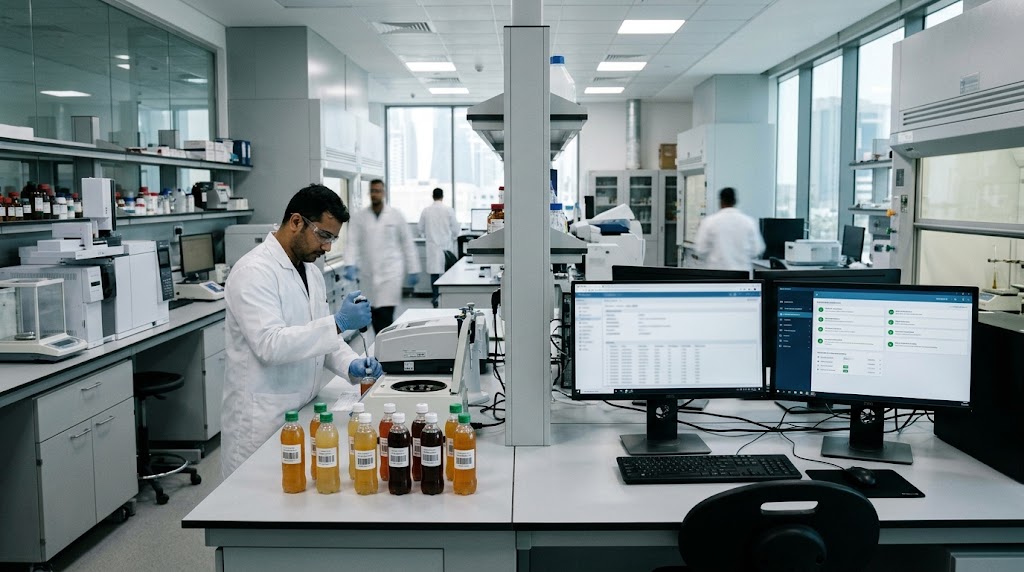
Arabian Current
What happened
Approved laboratory results and certificates are transmitted automatically into Dhareeba through direct integration.
Why it matters
Qatar's Dhareeba platform now receives approved sweetened-drink laboratory certificates directly from accredited labs, eliminating manual certificate uploads while leaving the testing and tax obligations themselves in place.
GTA has not published quantified before-and-after processing times or the number of registrations expected to use the new integration.
Qatar's Dhareeba platform now receives approved sweetened-drink laboratory certificates directly from accredited labs, eliminating manual certificate uploads while leaving the testing and tax obligations themselves in place.
Qatar has removed one manual step from registering sweetened drinks for excise tax.
From November 1, accredited laboratories can transmit approved analysis results and certificates directly into the Dhareeba tax platform.
Taxpayers no longer need to receive the certificate and upload it themselves.
The laboratory test itself has not disappeared.
The taxpayer still starts the registration
A business first submits the sweetened-drink product registration through Dhareeba.
It then provides a product sample to a laboratory accredited by the Ministry of Public Health and registered with the General Tax Authority.
The laboratory tests the types and quantities of sugars and sweeteners in the product.
The handoff now happens system to system
Once the laboratory approves the results, the testing data and certificate of analysis are sent automatically into Dhareeba.
GTA staff can access the results directly through the platform.
The practical change is therefore in transmission and verification of evidence rather than removal of the underlying testing requirement.
November 1 did not introduce the sweetened-drink tax
Qatar's tiered excise-tax mechanism for sweetened drinks took effect on July 6, 2026.
The tax is calculated according to sugar or added-sweetener content.
The November 1 change concerns the electronic handling of the laboratory evidence used during product registration.
Sugar level determines the tax treatment
Under the current system, sweetened drinks are placed into tax treatment based on sugar content per 100 millilitres.
Products below the low-sugar threshold can be exempt while medium and higher sugar levels attract excise tax under the tiered model.
That makes the laboratory result operationally important because it contributes directly to the product's tax classification.
Automation reduces document handling, not tax responsibility
Direct data transfer can reduce mistakes caused by manual uploads and remove repetitive administrative work.
It does not transfer the taxpayer's broader responsibility for correct product registration and tax compliance to the laboratory or the Dhareeba platform.
The business still has to follow the applicable excise-tax requirements.
The next useful metric is processing time
GTA says the integration is intended to accelerate product-registration processing and improve data accuracy.
It has not published a before-and-after average registration time or an error-rate comparison.
Those figures would show how much operational friction the integration actually removes.
What Arabian Current is watching
Watch processing times, registration volumes, rejected laboratory submissions and whether similar direct data integrations are introduced for other tax or product-compliance procedures.
The technology change is small from the outside, but it removes a human document handoff from a regulated tax process.
Sweetened-drink registration required laboratory analysis and the supporting certificate had to move through a more manual document process.
Approved laboratory results and certificates are transmitted automatically into Dhareeba through direct integration.
The next useful evidence will be measured reductions in processing time, errors and administrative handling.
Show the record behind the claim.
Claims stay source-linked, with limits recorded.
The General Tax Authority states that direct electronic laboratory transmission became effective on November 1, while separate GTA guidance confirms the tiered sweetened-drink excise tax itself has been effective since July 6.
Material reporting is designed to retain the evidence behind the published claim.
Companies, regulators and projects can link back to persistent records.
Automation can assist discovery and extraction; publication authority remains editorial.
Open the evidence record.
2 linked sourcesSupport + limitations recorded.
01Core evidenceEffective 1 November 2026: Implementation of Electronic Testing Procedures for Sweetened Drinks via the Dhareeba Platform
General Tax Authority
+
Effective 1 November 2026: Implementation of Electronic Testing Procedures for Sweetened Drinks via the Dhareeba Platform
General Tax Authority
Confirms direct electronic transmission of laboratory analysis results and certificates into Dhareeba from November 1 and the continued sample-testing workflow.
Does not provide quantified processing-time savings or registration volumes.
02ContextGeneral Tax Authority Announces the Implementation of the Excise Tax Mechanism on Sweetened Drinks
General Tax Authority
+
General Tax Authority Announces the Implementation of the Excise Tax Mechanism on Sweetened Drinks
General Tax Authority
Confirms that the tiered sweetened-drink excise-tax mechanism itself took effect on July 6, 2026 and explains the sugar-based tax model.
Predates the November laboratory-system integration.
The story keeps moving.
Track product-registration turnaround time, error rates, laboratory coverage and further machine-to-machine tax integrations.

Reporting with a visible evidence trail.
Arabian Current reporting is built around human editorial authority, source-linked claims and visible evidence trails.