
Dubai's Store of the Future Is Becoming a Sensor-and-AI Interface
Shop Arabia 2026 is putting AI, sensors, electronic displays and checkout automation inside the physical store. The emerging shift is that retail space itself is becoming a software-controlled interface.
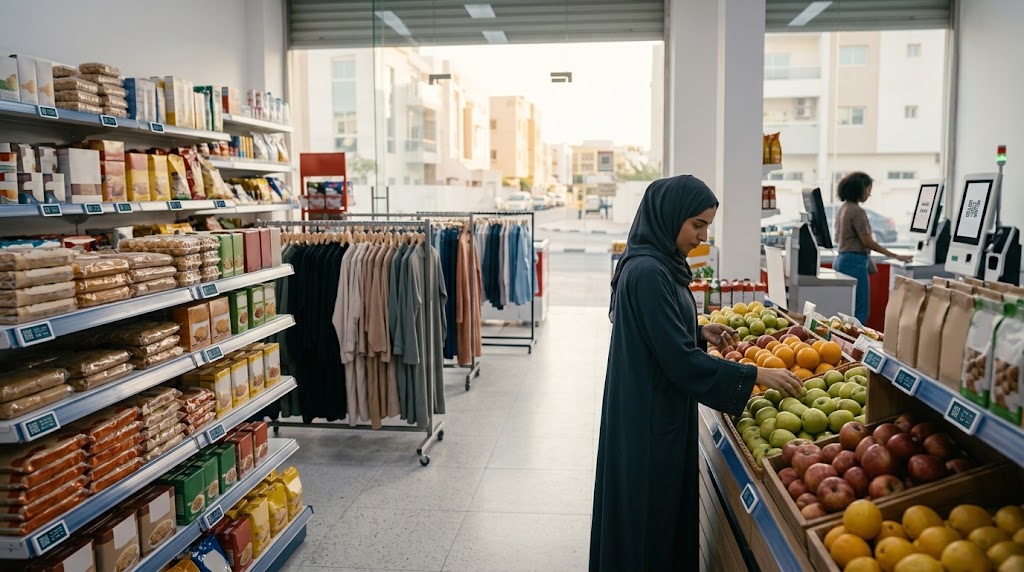
Shop Arabia shows physical retail becoming a programmable technology environment where AI, sensors, displays and checkout systems increasingly shape what shoppers experience inside the store.
Physical retail in the Gulf is becoming less physical than it looks.
Shop Arabia 2026, running in Dubai from September 22 to 24, is bringing together technologies spanning smart stores, digital signage, customer engagement, self-service checkout, sensors and real-time retail analytics.
The important pattern is not any single screen or device. It is that the store itself is increasingly being treated as a programmable interface.
The shelf is becoming a data surface
The September 23 programme includes a session focused on combining visual merchandising with real-time insights from AI and sensors.
Electronic shelf labels and connected displays push the same idea further: price, product information and merchandising no longer have to remain static until a member of staff changes them.
The physical environment can respond to data in much the same way a website does.
Checkout is disappearing into the experience
Shop Arabia's technology categories include self-service systems, connected point-of-sale infrastructure and checkout innovation.
That shifts the design question from where a customer pays to how little interruption payment creates in the overall journey.
The more these systems connect inventory, customer data and payment, the less checkout behaves like a separate physical destination inside the store.
Smarter stores create more measurement
AI-driven customer journeys and sensor-based merchandising can give retailers much more information about how people move through physical spaces.
That creates potential operational value, but it also increases the importance of transparency around what is being measured, which data is retained and how customer behaviour is profiled.
An exhibition shows direction, not adoption
Shop Arabia demonstrates what technology vendors and regional retailers are prioritising.
It does not establish that every Gulf store is already using AI, smart shelving or automated checkout at scale.
The stronger evidence will come from named deployments with measurable effects on conversion, staffing, inventory accuracy and customer experience.
What Arabian Current is watching
Watch which Gulf retailers move sensor-based merchandising, electronic shelf labels, virtual try-ons and checkout automation from exhibition floors into ordinary stores.
Store technology was often layered onto physical retail as separate screens, POS terminals or back-office systems.
The current retail technology stack increasingly links sensors, AI, digital merchandising and checkout directly into the physical customer journey.
The test is deployment: named Gulf stores, measurable commercial results and clear data-governance practices.
Show the record behind the claim.
Claims stay source-linked, with limits recorded.
Shop Arabia's official programme and event materials establish the current technology themes and regional retail participation. Exhibitor reporting provides examples of electronic shelf labels and smart-retail products. The sources do not establish broad regional deployment.
Material reporting is designed to retain the evidence behind the published claim.
Companies, regulators and projects can link back to persistent records.
Automation can assist discovery and extraction; publication authority remains editorial.
Open the evidence record.
3 linked sourcesSupport + limitations recorded.
01Core evidenceShop Arabia 2026
Terrapinn
+
Shop Arabia 2026
Terrapinn
Confirms the Dubai event and its focus on smart-store technologies, digital signage, customer engagement, checkout innovation and immersive physical retail.
An event programme establishes technology priorities and showcases rather than production adoption across Gulf retail.
02Core evidenceShop Arabia DXB Agenda
Terrapinn
+
Shop Arabia DXB Agenda
Terrapinn
Shows sessions on AI-orchestrated customer journeys, smart-store design, real-time merchandising using AI and sensors and experiential retail.
Conference sessions describe industry direction and case-study themes but do not independently establish the performance of individual deployments.
03Supporting evidenceReliable Hub's Engineering makes its global debut at Shop Arabia 2026
Retail4Growth
+
Reliable Hub's Engineering makes its global debut at Shop Arabia 2026
Retail4Growth
Provides a concrete exhibition example involving electronic shelf labels, digital displays and IoT-based smart-retail technology.
An exhibitor showcase does not prove customer adoption or measurable performance in Gulf stores.
The story keeps moving.
Track named retailer deployments, electronic shelf-label adoption, automated checkout, sensor-based merchandising, virtual try-ons and customer-data controls.

Reporting with a visible evidence trail.
Arabian Current reporting is built around human editorial authority, source-linked claims and visible evidence trails.